Friday, April 19, 2013

GPS: Global Positioning System - Danesha

Image courtesy of Amazon.com

GPS: Global Positioning System
by Jeanne Sturm

Review by Danesha

People love to explore, that's why we need a GPS.  Hey, do you know what GPS stands for?  It stands for Global Positioning System.  They use satellites and monitoring stations and receivers to tell where you are.  Guess who came up with this?  Our own government!  Isn't that cool?  The military used it, but soon it was released to the public.  It's used by fishermen, hikers and all types of people. In the early days, people used the stars and the sun to tell where they were.  Do you know how to use the sun to tell where you are?  You can tell where you are by where the sun is in the sky!

The Properties of Solids - Katimala

Image courtesy of Amazon.com

The Properties of Solids
by Marylou Morano Kjelle

Review by Katimala

There are three basic states of matter; liquids, solids and gasses.  On Earth there are more solids than gasses or liquids.  The molecules of solids are locked tightly together, but the molecules of liquids and gasses move around more freely.  Solids have no flow because a solid keeps its shape.

I recommend this book for people who want to read about solids.


Monday, April 8, 2013

The Declaration of Independence - Shanesa

Image courtesy of Amazon.com

The Declaration of Independence
by Michael Burgan

Review by Shanesa

On June 7, 1776, members, or delegates, from the thirteen American colonies gathered in Philadelphia.  they met at the Pennsylvania state house, known as Independence Hall.  These men formed the 2nd Continental Congress.  They were rebelling against King George III and Britain.  America was deciding whether to declare it's independence.  As the years passed, things in Britain got worse.  Thomas Jefferson was the main author of the Declaration of Independence.  The Declaration was signed on July 4th, which we now know as Independence Day.

I recommend this book to anybody who wants to learn about the Declaration of Independence.

Transfer of Energy - Alyssa

Image courtesy of  Amazon.com

Transfer of Energy
by Simon de Pinna

Review by Alyssa

In this book they talk about all the different types of energy and how they transfer.  Energy is everywhere.  It makes things move and takes many forms. 

You get energy from the food you eat.  Some machines, such as cars or stoves, get their energy from gasoline or natural gas.  Food, such as meat, gives you all the energy you need to keep warm and move around.

Light and energy travel in waves, as do other forms of energy, such as radio waves, infrared and ultra-violet waves and microwaves.  Without light energy we wouldn't be able to see anything.  An object becomes visible only when light from the sun or another source of light, such as a flashlight, bounces off the object and enters our eyes.  When you look out the window, you can see whatever is on the other side, even though there is glass between. 

Transmission takes place when light waves hit a material and continue on through.  Have you noticed that on a sunny day, the dark asphalt gets hotter than the lighter cement curb or sidewalk?  Both are on the direct path of the sun's energy, but the asphalt absorbs more light energy. 

Heat radiation, or infrared radiation, is the form of heat energy that can travel through the vacuum of outer space as electromagnetic waves.  Potential energy is another way of saying "stored energy".

I would like to recommend this book to anybody who wanted to get further knowledge on what are the different types of energy transformations and how they work.  Also the age group I would recommend this to is middle school and high school.

Countries in the News: Mexico - Shanesa

Image courtesy of Amazon.com

Countries in the News: Mexico
by Kieran Walsh

Review by Shanesa

Mexico is a country just south of the United States.  It comes in contact with Texas, New Mexico, Arizona and California.  The two major bodies of water that surround Mexico are the Pacific Ocean and the Gulf of Mexico.  One of the world's famous rivers known as the Rio Grande, flows right through Mexico.  Mexico's climates are warm.  During the months of April and May, the temperature hovers around 80 degrees.

The capital of Mexico is Mexico City.  Not only is it one of the world's largest cities, it is also known as one of the oldest.  Mexico city was built on top to the ruins that were once known as Tenochtitlan.

Out of the Mexicans that live in Mexico, 60% of them are Mestizos and 30% of them are Amerindra.

Everywhere you go, you'll hear different types of music.  Out of all the known music, you will hear mariachi the most.  Bull fighting is known as the most popular sport in Mexico.  Mexico also has special celebrations for the following events in history.  Cinco de Mayo, the celebration of their victory against France.  Dieciseis de Septiembre is the celebration of winning the war against Spain for their independence.

I recommend this book to all the people in the world who want to learn more about other countries and to those who want to know what other cultures are like.  I recommend this book for ages 9 and up.

Economies Around the World - Alyssa


Image courtesy of Amazon.com

Economies Around the World
by Gail Fay

Review by Alyssa

Every country in the world has an economy.  Gross domestic product (GDP) measures the strength of a country's economy.  The dollar amount is the value of all goods and services produced within a nation in one year.  A higher GDP means the country is using its resources effectively to make a lot of products.  It also means the country has consumers who have capital resources to buy what is produced.  A lower GDP means either the country is not using its resources effectively, or the country has very limited natural, capital or human resources to work with.

I would recommend this book to anyone who would want to know the full background on what economies are all around the world.  This book is recommended for high school students.

Solar Energy - Na'Daisa

Image courtesy of Amazon.com

Solar Energy
by Chris Oxlade

Review by Na'Daisa

Energy makes everything in the universe happen.  Lights in cities use energy.  Energy comes from energy sources.  The most common energy sources are oil, coal and natural gas; which are known as fossil fuels.  Solar energy is energy from the sun.

We use a staggering amount of energy.  As the population grows, we will need more energy.

Nuclear reactions happen in the center of the sun.  The reactions give out huge amounts of energy.  It is given out into space in the form of radiation.  The main types are light and heat.  Heat and light from the sun travel as rays.  Heat rays from the sun that hit Earth's surface makes the surface warm.  The heating effect is also greater in summer.  The warm surface of the Earth heats the air above it.  This heat makes the air swirl around, which creates wind and rains.


Find It: Searching for Information - Shanesa

Image courtesy of Amazon.com

Find It: Searching for Information
by Miriam Coleman

Review by Shanesa

Need help finding ways to look for information?  Try the internet.  You can download, search and more.  You can also use an almanac.  An almanac is a book of facts.  You can also find information by observing.  Research lets you find information.  There are many ways to find information.

I recommend this book to anybody who wants to learn about things that can help with research.  I recommend it to children ages 13 and up.

Reducing Air Pollution - Na'Daisa

Image courtesy of Amazon.com

Reducing Air Pollution
by Jen Green

Review by Na'Daisa

The air in Earth's atmosphere is vital to living things.  Nature can produce some pollution, but people and their machines also cause much of the pollution that harms the air and damages the natural world.

A layer of gas called Earth's atmosphere surrounds our planet like a blanket.  The main gas in the atmosphere is nitrogen.  The concentration of the different atmospheric gases is uneven and stronger near Earth's surface than gas concentrations higher up.

Polluted air harms life on Earth.  Most polluted air comes from vehicles such as buses, cars and airplanes.  Many scientists believe that air pollution is changing our weather patterns and climate.

Natural cycles such as plants and animals, help maintain the balance of gases in the air.  Plants add oxygen to the air as they make their own food in a process called photosynthesis.  They absorb carbon dioxide gas, water and minerals and make sugar using sunlight.

Plants release oxygen as a waste product.  Animals breathe in oxygen and breath out carbon dioxide.

Korean War Memorial - Shanesa

Image courtesy of Amazon.com

Korean War Memorial
by J.S. Burrows

Review by Shanesa

Eight years after World War II, the soldiers returned from the Korean War.  Everybody had forgotten about the Korean War.  Years later, people began to realize that they never gave appreciation to the people that served in the Korean War.  The people, therefore, made a memorial site in Washington, D.C. called The Korean War Memorial.  The Korean War Memorial is visited by thousands of people.

I recommend this book to people who like to learn about history.  Children from ages 12 - 15 in grades 7 - 9 would appreciate this book.

Thursday, March 28, 2013

In the Air: F/A 18 Super Hornet - Alyssa

Image courtesy of Amazon.com

In the Air: F/A 18 Super Hornet
by Lynn Stone

Review by Alyssa

This book is about a Navy aircraft carrier called the Super Hornet, which is the Navy's newest and best multi-role fighter.  The Super Hornet is very fast and maneuverable.  They are loaded with flying features for top performance and pilot control.  The Super Hornet can be used for both a fighter or an attack plane.  It can be equipped quickly to be an air-to-surface jet, or an air-to-air combat fighter. 

As a true fighter plane, the Super Hornet can engage and destroy enemy aircraft in the air.  As attack aircraft, Super Hornets can attack targets on land or sea, day or night.  During night missions, pilots wear night goggles so that pilots can see images in the darkness.  The F/A-18E Super Hornet is a single seat airplane.  The F/A-18F is a two seater.  The two seater super Hornet is primarily used for attack, air control missions and reconnaissance.

I would gladly recommend this book to anyone who would truly want a state-of-the-art background and information about the F/A-18 Super Hornet.  Middle school is the target audience for this book.

Suicide Bombers - Emily

Image courtesy of Amazon.com

Suicide Bombers
by David Baker

Review by Emily

Suicide Bombers, by David Baker, is a part of the Fighting Terrorism series, which teaches us about the different forms of terrorism and how our country fights to prevent it.  A suicide bomber is someone who works for a terrorist group, and is willing to kill themselves to carry out an act of terrorism; often taking unwilling people along for the ride.  The three categories of suicide bombers - airplane, boat and land vehicles like SUVs, and just the bomber himself - are all discussed.  If you want to learn more about suicide bombers and the three categories, as well as what the government does to help prevent terrorism, read this book.

I really like this book and I'm absolutely going to read more in the series.  Grades 5 - 8 will really enjoy reading this book, and so will anyone else who's interested.

Present It: Understanding Contexts and Audiences - Alyssa

Image courtesy of Amazon.com

Present It:  Understanding Contexts and Audiences
by Miriam Coleman

Review by Alyssa

In this book, the author talks about exactly what a presentation is and how you want to present by making your topic very clear and interesting.  You should catch your audience's attention and keep them focused on you rather than going to sleep on you. 

The author also mentions how you should think of the amount of knowledge your audience already has on the topic you're presenting.  If they have no idea what you're talking about, make sure you outline and carefully explain what things might seem basic to you.  Make sure you know exactly what you're trying to say when presenting. 

There are different types of presentations which require different skills and strategies.  For example, you have written and oral reports.  As far as written presentations go, you have to make sure that, especially if you have to type it out, that your spelling and grammar are intact!  When it comes to oral reports, make sure you talk slow and loud enough for the people to hear.  Use visuals so the people can picture what you're saying.

I would like to recommend this book to anyone who truly wants a brief, but solid strategy on what is a presentation, how to present and the different ways to do a presentation.  This book will appeal to anyone from age 10 to adult.

What do you Know About Light - Latricia

Image courtesy of Amazon.com

What do You Now About Light?
by Tilda Monroe

Review by Latricia

What do you Know About Light is a book about light.  Light bounces back on some matter and this is called refraction, or bended light.  Light is a kind of energy sitting still, but light moves through a vacuum such as space.  When light moves in space, it moves faster than anything else in the universe.  Light moves at different speeds based on where it is.  It moves more slowly when it goes through air, water, glass and other matter. 

The length of a light wave is called the wavelength.   Also, different kinds of light have different kinds of wavelengths.  The frequencies are how many waves travel in a second.

This book is age appropriate for 10 and up, and grades 4 to college.  I think this book will interest kids and help them out with science class.

The Branches of U.S. Government - Emily

Image courtesy of Amazon.com

The Branches of U.S. Government
by Michael Burgan

Review by Emily

In The Branches of U.S. Government, the author Michael Burgan discusses the three branches of the United States government and what they do.  The legislative branch, which is run by congress, makes the laws.  The executive branch is run by the president, who carries out the laws.  The Judicial branch consists of the courts, and its job is to interpret the law, or make it understandable.  If you want to know more, read this book!

I really liked this book and think that anyone interested in learning about our government and how it works will too!  I'll make a great review for civics as well!

Tuesday, March 26, 2013

Paying Taxes - Latricia

Image courtesy of Amazon.com

Paying Taxes
by Sarah De Capua

Review by Latricia

The book Paying Taxes is about everybody paying taxes and why you have to do it.  Did you know that many states charge a lower tax on groceries than other purchases?  Everyone has to pay a toll.  Homeowners pay taxes for services.  For example, this means phone, gas, electric and water bill all have taxes added to them.

There are different types of taxes.  There are excise taxes, such as luxury items like jewelry.  Also, there are tariff taxes, which are taxes on products that are imported from other countries.  Another tariff tax is an export tax, which is also paid on products.

I recommend this book for grades 5 - 10 and ages 9 and up.  This author did an excellent job telling about taxes.


Sunday, March 24, 2013

Animal Invaders - Akiera

Image courtesy of Amazon.com

Animal Invaders
Amanda Doering Tourville

Review by Akiera

Psst!  Hey, over here.  Aren't you tired of going in the kitchen, minding your business, craving chips.....and surprise, surprise!  A roach!  Can you spell "disgusting" and "annoying"?  Do you know what these pest are called...besides a bug?  If you said "animal invaders" you are right on the money.  Animal invaders make ANYWHERE their habitat.  Hey, it may even be under your bed.  Fact:  invasive insects can case serious damage to crops!  Yeah, they make farmers really angry!  I'm not going to tell you anything else.  A bee is listening to our conversation.  If you read this book, tell it "I love you" and come rescue me!  I recommend this book for lovers of bugs and student who reluctantly have to read this book.

Amending the Constitution - Akiera

Image courtesy of Google Books

Amending the Constitution
by Eric Oatman

Review by Akiera

Here ye, here ye!  I hereby declare that thee constitution shall be amended.  But what all do you know about the constitution?  You do need to know that without the Bill of Rights, there would be no constitution!  Yep!  "A bill of rights is what the people are entitled to against every government on earth and what no just government should refuse."  said Thomas Jefferson, who wrote the Declaration of Independence.  How wonderful he is!  This book can explain the steps and how to amend the constitution!  Read it....It's awesome!  I recommend this book for grade levels 7- 9 and to any civics student.

What do you Know About Atoms and Molecules - Na'Daisa

Image courtesy of Amazon.com

What do you Know About Atoms and Molecules
by Tilda Monroe

Review by Na'Daisa

What are atoms?  Atoms are so tiny that they can't be seen.  Atoms have other parts called molecules.  Molecules are also tiny.  Even though atoms are tiny, they have even smaller parts.  There are three main kind of parts, electrons, protons and neutrons.  Protons and neutrons are always in the center of an atom.  When they are in the center, it is called the nucleus.

Electrons never stop moving because they're busy.  An atom's electrons orbit the nucleus.  All atoms have the same basic parts.  Atoms with different numbers of protons are different.  Atoms can also be called elements.  Examples of elements are silver, gold, and oxygen.  The periodic table is where you can find elements.  The chart includes the element's atomic number and tell how many protons and electrons it has.  Electrons are negative (-), protons are positive (+) and neutrons are neutral, meaning they have no charge.

Atoms are not always balanced.  Sometimes an atom loses an electron.  If an atom gains an electron it has a negative charge.  Atoms can join together.  Whey they join together, their forming a bond.  A bond forms when two atoms share electrons from each other.

Two kinds of bonds are covalent and ionic.  Covalent bonds happen when two atoms share electrons and ionic bonds form when one atom gives up.  Atoms bonded together are molecules.

I recommend this book for everyone.  I liked the book because I learned more about atoms.

Countries in the News: Korea - Akiera

Image courtesy of Amazon.com

Countries in the News:  Korea
Kieran Walsh

Review by Akiera

This book explains how Korea was partitioned into North Korea and South Korea.  They are both on a peninsula that extends nearly 600 miles.  The United States controls South Korea, that is why they live an average life like we do.  However, North Korea is a communist country controlled by a dictator.  Mostly everyone in Korea is Korean and works in industry.  School and sports are fundamental in both North and South Korea.  Hopefully, in the future, North and South Korea will unite in peace and harmony as one country.  I recommend this book for lovers of foreign countries, grades 5 - 7.

Share It: Using Digital Tools and Media - Akiera

Image courtesy of Amazon.com
 
 
Share It: Using Digital Tools and Media
by Miriam Coleman
 
Review by Akiera
 
Technology.  What do you think about when you hear that word?  Do you think about robots?  Technology is any advanced tool that helps people do or make things.  It is a major part of our everyday life.  In schools, they installed SMART-boards that are electronic with the touch of anyone's finger.  How AWESOME is that?  Technology involves digital tools that help us with many things.  You can archive things, listen to audio and many more.  It's time to get teched out!  This book will put you in a technological trance of knowledge.  I recommend this book for technology lovers and grade levels 6 - 12.


Wednesday, March 20, 2013

Becoming a Citizen - Emily

Image courtesy of Amazon.com

Becoming a Citizen
by Sarah De Capua

Review by Emily

A citizen is a member of a country, like the United States.  If you were born or naturalized in the United States, then you are a citizen.  In Becoming a Citizen by Sarah De Capua, you learn about who can become a citizen and what it means to be one as well.  There are two ways that you can become a citizen; birth and naturalization.

If you are born in the United States, then you are a citizen.  However, if you were born in another country and you want to become a citizen, you can be naturalized.  Naturalization is the process of becoming a citizen by going through a series of tests.  In order to be naturalized, you must be at least eighteen years old, but if you are under eighteen, an adult can submit an application for you.  You also need to have a green card to prove you live here legally.  In most cases you have to have lived in the Untied States for at least five years before you can start the process. 

Want to learn more?  Then read Becoming a Citizen by Sarah De Caupua, which contains more information as well as other sources.

Did I like this book?  Of course I did - it's civics!  I think anyone from grades 3 - 8 would enjoy this book if they are interested in the subject.  Students in 8th grade should read this book because this is what you learn about in civics class, and it could be a great review.

Monday, March 18, 2013

Up, Down, All Around - Alyssa

Image courtesy of Amazon.com

Up, Down, All Around
by Jacqui Baily and Matthew Lilly

Review by Alyssa

Basically this book is about a boy who is talking about his adventure to get ready for space and the trip on the way there.  While he does that, he talks about how he gets all cleaned up so he can have his hygiene together, then he goes out to the park and plays catch with some of his friends.  Later after that, he talks about people's theories on how gravity works and what it does and what's the importance of it.  Later on in the story, they talk about how he felt when he had finally gotten to the space shuttle and was ready to take off.  Also they talk about how the food they eat in space is prepared a lot more differently than how we make it on earth and how it's dried up and has to have a little bit of water in it in order to make some mositure.  Also they talk bout how he has to sleep, shower, and etc...a whole different way.

Sound Waves - Latricia

Image courtesy of Amazon.com

Sound Waves
by Ian F. Mahaney

Review by Latricia

Sound Waves is an interesting book about sound.  The book tells you that everything is made up of matter and matter is everything that makes up space.

Atoms are tiny bits of matter.  For example, rain, air people breathe and hair on people heads are uncountable atoms.  Water has two molecules of hydrogen and one molecule of oxygen.  Hydrogen and oxygen are gases and both of them you can't see or smell.  Matter moves around, place to place.

When atoms move place to place, it causes vibrations.  Vibrating atoms and molecules create the sound waves.  For example, a guitar string that has been plucked.  When people talk, part of you is vibrating and air pushes through a part of your throat called the larynx.  The air that passes through part of the larynx called the vocal cords.

Human and animals have three parts of ears.  The first parts are the outer ear, which is the part we can see.  the middle ear includes three small bones called the hammer, the anvil and the stirrup.  Finally the inner ear is a combination of tiny hairs and liquid called cochlea.  Cochlea translates vibrations into sound that our brains can understand.

Low frequency sounds are like drumbeats and a high frequency sounds are like birds singing.  The frequencies are the number of sound waves that pass in a second. The human audible is between 20-20,000 hertz.  Frequencies below 20 hertz are infrasound and frequencies about 20,000 hertz are ultrasound.  If sound passes the air it can be between 331 and 350 meters per second.

This book is age appropriate for grades 4 - 8 and ages 9 - 15.  I really liked this book because it taught me things I did not know.  We are also learning about this in class.

Thursday, March 14, 2013

Countries in the News: France - Na'Daisa

Image courtesy of Amazon.com

Countries in the News: France
by Kieran Walsh

Review by Na'Daisa

France is one of the largest countries in Europe.  It has a variety of landscapes including fertile plains, mountains and rivers.  The Loire and the Seine are two of France's longest rivers.

France has a lot of large cities.  Paris is the capital of France and one of its largest cities.  There are a lot of landmarks in Paris such as the Eiffel Tower, the Louvre Museum and the Champs Elysees.  The Eiffel Tower is one of the world's best known sights.

The majority of people who live in France were born there.  Some of the other populations are German, Italian and Portuguese.  France has schools called "lycees" which is are schools maintained by the government.  French children attend public elementary schools from ages 6 to 11.  The French people have a very high literacy rate.  Soccer is the most popular sport in France.

I liked this book because it tells you things about France you don't know.

The Nature of Matter - Katimala

Image courtesy of Amazon.com

The Nature of Matter
by Christine Caputo

Review by Katimala

We are surrounded by matter.  Everywhere we go, matter is there.  The objects we touch, the food we eat, the air we breathe is matter.  Mass is the amount of matter in an object.  Volume is how much space something takes up.

The lightest known solids are called aerogels.  Paraffin is an amorphous solid, which can change its' shape.  Every molecule of methane has one carbon atom and four hydrogen atoms.  The whole world is made up of atoms and matter.

I do recommend this book for 7th grade and under.  They should learn about this when they're younger so when they get older they would already know this stuff.

Why do Balls Bounce? - Danesha

Image courtesy of Amazon.com

Why Do Balls Bounce?
by Rob Moore

Balls bounce because a ball's fall produces a force against the ground and because the earth is so much bigger, the ball is dented when it hits the ground.  When it's dented, the dent tries to push the ball back into shape.  The ball will return to it's shape, then gravity will cancel the ball's bounce.  Then the ball will come down again.  Therefore that's what causes the ball to bounce.

Tuesday, March 12, 2013

The City Council - Latricia

Image courtesy of Amazon.com

The City Council
by Terri DeGezelle

Review by Latricia

The city council book tells you about city councils.  City councils are elected to serve their cities.  They listen to the needs of other citizens.

In addition, city council members pass new laws about the garbage and waters systems.  They also make new city laws and the new laws are called ordinances.  Some of these ordinances are streets, pets, noise and buildings.  They also oversee city services.

City councils members serve one to four on council.  You must be 18 years or older to serve on council.  City councils usually have five to nine members, but New York City has 51! 

Cities are divided into wards.  Citizens of the wards talk about planning, new ideas and laws.  City council members listen to the citizens of their wards about their issues and how they can make their cities better.

This book is appropriate for 4th and 5th graders because it explains the difference between why city councils work and what they work for.  I enjoyed this book very much.

Why Does Sound Travel? - Danesha

Image courtesy of Amazon.com

Why Does Sound Travel?
by Nicolas Brasch

Review by Danesha

Sounds are vibrations that travel through the air, or other medium, like water.  Sound travels in waves and the volume of a sound depends on the size, height and frequency of the waves that are created.  How do our ears hear sound?  Our ears have three sections; outer, middle and inner.  The outer collects sound waves which are channeled to the middle ear, which hits the eardrum, then they're converted into signals that are sent to the brain.

If you like to know how sounds works, or if you are interested in facts about sound, read Why Does Sound Travel?

Saturday, March 9, 2013

Running for Public Office - Emily

Image courtesy of Barnes and Noble.com
 
 
Running for Public Office
by Sarah De Capua
 
Review by Emily
 
Running for Public Office by Sarah De Capua talks about what a public office is and how candidates campaign for these important roles.  In short, a public office is a position that can be held by a candidate who is elected for the position they ran for.  A successful campaign needs resources such as money, volunteers, and a convincing candidate who seems fit for the job and can receive votes.  Candidates get votes by connecting to the voters and the rest of the public.  Candidates connect to the public in many different ways, such as press conferences, door-to-door, school visits, rallies, speeches and advertisements.

We also learn that the most difficult office to run for is the U.S. President. The U.S. Presidential Election happens every four years on a Tuesday between the 2nd and 8th of November, but campaigns for President start two years before Election Day! The candidates find out if they won after the ballots are counted and the results are announced, which is usually on the night of or morning after Election Day. After the results are announced, both the winners and the losers make speeches. The losers give a concession speech, in which they thank those who helped with the campaign and wish the winner luck, and the winners discuss what he or she plans to do while they are in office.

  I sincerely enjoyed this book, and I think readers in grades 4-7 would enjoy it, too. Surprisingly, I did learn something from this book. I did not know that the Presidential Campaign starts two years before Election Day. Wow!


Monday, March 4, 2013

Oceans - Carmen

Image courtesy of Amazon.com

Oceans
by Precious McKenzie

Review by Carmen

The earth is made up of 97% water.  Most of that water is oceans.  All oceans are connected.  The Gulf Stream begins in the Gulf of Mexico.  The ocean floor looks just like the land.  There are even trenches.  The Giant Squid lives at the bottom of the ocean.  People enjoy marine life.  People drill in the ocean to look for oil.  Humans can't live without oceans.

I did not enjoy this book, but I believe this book will most likely appeal to any age group as long as they like oceans and sea animals. 

The U.S. Presidency - Latricia

Image courtesy of Amazon.com


The U.S. Presidency
by Muriel Dubois
 
Review by Latricia
 
The U.S. Presidency is about the president and what he does to achieve his goals and dreams.  The president leads the United States.  He can sign or veto a bill into a law.  He also flies to other countries to meet their presidents. 
 
The president goes to important meetings and gives important speeches.  He and his family live in the White Hose in Washington, D.C.  He has a cabinet full of people that make his job a lot easier on him.
 
This book is age appropriate for children in 4th grade through 8th grade.  It tells you about how the president does his job and also how he runs his office.  It also can help you with what you are learning about in class.

Sunday, February 24, 2013

Countries in the News: Japan - Akiera

Image courtesy of Amazon.com

Countries in the News: Japan
by Kieran Walsh

Review by Akiera

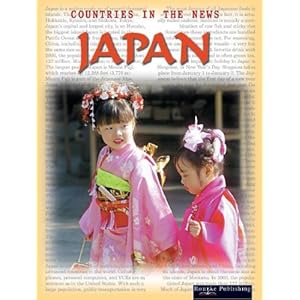
Kunichiwa!  Are you curious to know facts about Japan?  Whether you want to know how the land is, the (popular) foods they eat, or just want to know what religions they serve, don't worry, Countries in the News: Japan is a great book to read to learn about Japan.  Open the book and take a ride through the book.  You will learn that the four main islands of Japan are Honshu, Hokkaido, Kyushu and Shikoko!  You will also learn that sushi is REALLY  called sashimi.  You will also learn that the two main religions are Buddhism and Shintoism.  How exciting!

I enjoyed this book because it taught me more than I ever know about Japan!  I recommend this book to elementary kids grades 3-5 and middle school grades 6-7.  This book is amazing!

Credit Cards and Checks - Na'Dasia

Image courtesy of Amazon.com

Credit Cards and Checks
by Margaret Hall

Review by Na'Dasia

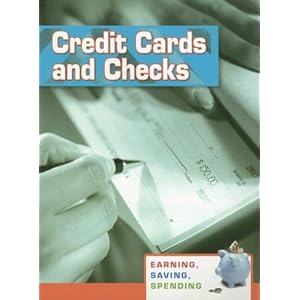
You can spend money without cash.  It is called using bank cards, such as credit or debit cards.  You can also use a check.  A check is like a note telling the bank to pay someone.  It is safer to use checks or bank cards to buy things.

To use a check, a person must have a checking account.  you have to give the bank some money, it is called a deposit.  When a person opens a checking account  the bank gives him or her a checkbook.  A check can be used like cash.  

When you pay by a check, there will be information that you have to fill out; your name, address, bank name, bank number, account number, check number, person receiving the money, date, amount of money, and your signature.  When using a debit card, you must have a PIN; personal identification number.  A business must pay banks a fee every time a customer uses a debit or credit card.  

Every month, the banks make a statement for each customer.  The account owners name, beginning and ending date for statement, checking account number and more will be on each statement.  The amount of money in a person's bank statement and check register should match.  

When people buy things without cash, checks and credit or debit cards, it is called a loan.

I like this book because I learned about checks and credit and debit cards.  I think this book s good for students because it can teach them about what they need to know about checks and cards.  They could learn how to earn and save.


Mixing and Separating - Katimala

Image courtesy of Amazon.com

Mixing and Separating
by Chris Oxlade

Review by Katimala

Materials are all around you, such as wood, metals, and plastic.  Some materials are natural like wood, clay, and water.  Humans make some materials such as plastic and glass.  

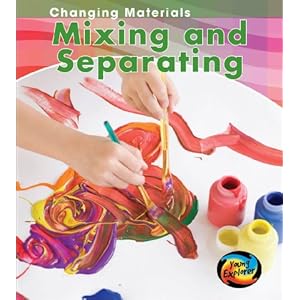
A lot of materials can change shape.  We can heat and cool it down.  When we mix materials we make new materials.  A mixture is made up of two or more materials.  Ice is a solid, water is a liquid and steam is a gas.

We use materials when we paint.  We mix different colors to make new colors.  We also use a lot of materials in the kitchen.  Those materials are called ingredients.  Most materials dissolve.

I recommend this book because it's very good.  You can learn a lot about different materials and how they change.  I recommend this book for people that love science.  Anyone that really likes science should read this book.

Friday, February 22, 2013

Space - Alyssa

Image courtesy of BarnesandNoble.com

Space
by Tim Clifford

Review by Alyssa

In this story, I learned a lot of intersting facts about space; like the only way you can be labeled an astronaut is if you can fly in outer space beyond an altitude of 50 miles (80.5km).  Another thing I learned is that the second closest object to us in the solar system is the moon, which is 240,000 miles (386,200 km) away!

The moon is covered in craters, which are large bowl-shaped holes in the surface of the moon caused by collisions with objects such as meteorites.  The moon has to go through stages; full moon, new moon, first-quarter, waxing Gibbous, waning Gibbous, crescent and last-quarter.

Earth is unique in the solar system...because it's the only planet that we know where life is supported.  The Earth is the third planet from the sun. 

I recommend this book because it gives you a lot of information dealing with outer space.  It is appropriate for elementary and middle school students.