Sunday, February 24, 2013

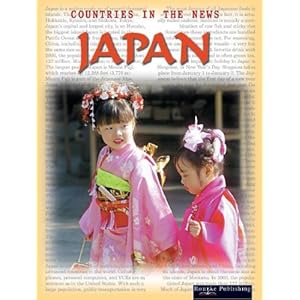
Countries in the News: Japan - Akiera

Image courtesy of Amazon.com

Countries in the News: Japan
by Kieran Walsh

Review by Akiera

Kunichiwa!  Are you curious to know facts about Japan?  Whether you want to know how the land is, the (popular) foods they eat, or just want to know what religions they serve, don't worry, Countries in the News: Japan is a great book to read to learn about Japan.  Open the book and take a ride through the book.  You will learn that the four main islands of Japan are Honshu, Hokkaido, Kyushu and Shikoko!  You will also learn that sushi is REALLY  called sashimi.  You will also learn that the two main religions are Buddhism and Shintoism.  How exciting!

I enjoyed this book because it taught me more than I ever know about Japan!  I recommend this book to elementary kids grades 3-5 and middle school grades 6-7.  This book is amazing!

Credit Cards and Checks - Na'Dasia

Image courtesy of Amazon.com

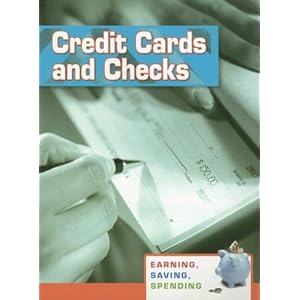
Credit Cards and Checks
by Margaret Hall

Review by Na'Dasia

You can spend money without cash.  It is called using bank cards, such as credit or debit cards.  You can also use a check.  A check is like a note telling the bank to pay someone.  It is safer to use checks or bank cards to buy things.

To use a check, a person must have a checking account.  you have to give the bank some money, it is called a deposit.  When a person opens a checking account  the bank gives him or her a checkbook.  A check can be used like cash.  

When you pay by a check, there will be information that you have to fill out; your name, address, bank name, bank number, account number, check number, person receiving the money, date, amount of money, and your signature.  When using a debit card, you must have a PIN; personal identification number.  A business must pay banks a fee every time a customer uses a debit or credit card.  

Every month, the banks make a statement for each customer.  The account owners name, beginning and ending date for statement, checking account number and more will be on each statement.  The amount of money in a person's bank statement and check register should match.  

When people buy things without cash, checks and credit or debit cards, it is called a loan.

I like this book because I learned about checks and credit and debit cards.  I think this book s good for students because it can teach them about what they need to know about checks and cards.  They could learn how to earn and save.


Mixing and Separating - Katimala

Image courtesy of Amazon.com

Mixing and Separating
by Chris Oxlade

Review by Katimala

Materials are all around you, such as wood, metals, and plastic.  Some materials are natural like wood, clay, and water.  Humans make some materials such as plastic and glass.  

A lot of materials can change shape.  We can heat and cool it down.  When we mix materials we make new materials.  A mixture is made up of two or more materials.  Ice is a solid, water is a liquid and steam is a gas.

We use materials when we paint.  We mix different colors to make new colors.  We also use a lot of materials in the kitchen.  Those materials are called ingredients.  Most materials dissolve.

I recommend this book because it's very good.  You can learn a lot about different materials and how they change.  I recommend this book for people that love science.  Anyone that really likes science should read this book.

Friday, February 22, 2013

Space - Alyssa

Image courtesy of BarnesandNoble.com

Space
by Tim Clifford

Review by Alyssa

In this story, I learned a lot of intersting facts about space; like the only way you can be labeled an astronaut is if you can fly in outer space beyond an altitude of 50 miles (80.5km).  Another thing I learned is that the second closest object to us in the solar system is the moon, which is 240,000 miles (386,200 km) away!

The moon is covered in craters, which are large bowl-shaped holes in the surface of the moon caused by collisions with objects such as meteorites.  The moon has to go through stages; full moon, new moon, first-quarter, waxing Gibbous, waning Gibbous, crescent and last-quarter.

Earth is unique in the solar system...because it's the only planet that we know where life is supported.  The Earth is the third planet from the sun. 

I recommend this book because it gives you a lot of information dealing with outer space.  It is appropriate for elementary and middle school students.


Voting - Emily

Image courtesy of BarnesandNoble.com

Voting
by Sarah De Capua

Review by Emily

In Voting by Sarah De Capua, we learn about how voting works.  Voting is a way for groups of people to make decisions by giving each person in the group a voice in choosing leaders and rules.  In order to vote, you have to be eighteen or older and an American-born or naturalized citizen.  Did you know that the U.S. Constitution didn't always guarantee everyone's right to vote?  When the U.S. Constitution first came into effect, only white men who owned land were allowed to vote.  African-Americans, Native-Americans, women and poor people had to fight for their right to vote.  We learn about what you do if you can't vote in person, and that it's the Electorial College that determines who wins the vote.  Another thing the book teaches us are the ways you can get involved in elections even if you can't vote.

I thought the book was alright, and it provided good information on voting and it's history.  I think students in grades 3-7 would enjoy this book most.

States of Matter - Na'Dasia

Image courtesy of BarnesandNoble.com

States of Matter
by Carol Baldwin

Review by Na'Dasia

What is matter?  Matter is anything that takes up space.  Matter is everywhere.  it can be water, air, food, buildings, plants, animals, and people.  Matter is made up of tiny particles called atoms.  Atoms are too small to see.  Atoms have mass.  Mass is the amount of matter in an object.  The mass of objects is measured in grams or kilograms.

Properties of solids:  Heat travels through solids by a process called conduction.  Some solids are good conductors of heat and electricity.  Some solids are poor conductors of heat and electricity.  Some solids float in water.

Properties of liquids:  Heat makes liquids expand.  When heat spreads through a liquid it is called convection.

I recommend this book because I like what I'm reading about.  I think this book is great for the six and seventh graders who are learning about matter and mass.  It can help with review.


Monday, February 18, 2013

The Attractive Truth about Magnetism - Akiera

Image courtesy of BarnesandNoble.com

The Attractive Truth about Magnetism
by Jennifer Swanson

Review by Akiera

Don't know much about magnetism?  Well, you will find this book attractive.  This book will teach you the true meaning about magnetism, feeling the force of some magnets, and some awesome facts about different types of magnets!  This book in not just educational, it's also fun!

Recommended for grades 3-6.

Making a Law - Latricia

Image courtesy of Amazon.com

Making a Law
by Sarah De Capua

Review by Latricia

The Making a Law book talks about how congress makes laws. The first step in making a law is for somebody to come up with a law, then they introduce the bill to a representative.  After that you will go to committee and they will vote.  Then you have a debate and lastly you will take it to the president.  The president will either pass it or veto it. 

I liked this book because it tells a lot about how to make a law.  It also tells the order of how you  make a law with details and context clues of what goes on in the real world and congress.  It is age appropriate for middle school because we learned about this in our civics class.

The U.S. Presidency - Emily

Image courtesy of Amazon.com

The U.S. Presidency
by Muriel L. Dubois

Review by Emily

The book The U.S. Presidency by Muriel L. Dubois teaches us a bit about who the president is and what he does.  It teaches us the basics about the three branches of government, especially the executive branch, which the president runs.  

We learn about what the president does in the White House, where he lives and works.  American citizens can vote for a president every four years, but a president can be re-elected to serve an additional four years, for a total of eight years.

The president has the power to elect public officials such as judges and members of his cabinet.  The president's cabinet is a group of people who give the president advice.

I think that this book was good but since it did notgive me any new knowledge, I would recommend it to anyone in grades 1-4 who enjoy learning about their president.

Tuesday, February 12, 2013

Our Footprint on Earth - Shanesa

Image courtesy of Amazon.com
Our Footprint on Earth
by Jeanne Sturm

Review by Shanesa

Our impact on Earth varies depending on where you live.  The United States is home to 5% of the world's resources.  In the mid 1700's we began replacing human workers with machines.  People once relied on wind, water and wood, but now rely on energy which is powered by machines that use fossil fuels, oil and natural gas.

Greenhouse gasses are contributing to global warming.  Without greenhouse gasses, temperatures on Earth would be about 90 degrees colder.  The sun, wind and ocean waves can help reduce the use of fossil fuels. 

Rain forests play an important role in our lives.  Tropical forests covered about 20% of Earth's surface before, but today it covers about 7%.  Chemicals used in gardens and on plants have a harmful effect on the environment.  They pollute ground water. 

Non-renewable energy is fossil fuels, coal, petroleum and natural gas.  Renewable resources include energy from the sun and wind.  Solar cells convert the sun's energy into electricity.  Hydroelectric power, or hydropower, is energy harnessed from flowing or falling water.  Biomass is organic matter made from plants and animals. 

It takes 5 - 500 years for certain kinds of trash to decay.  When you take a shower, you use 2 gallons of water per minute.  Flushing the toilet uses about 3 gallons of water.  Carbon footprints calculate the amount of carbon dioxide released into the atmosphere by your activities.  Charcoal that is biochar turns out to be a great fertilizer.

I would recommend this book to all people who want to save Earth, who want to reduce pollution in the environment and who want to know more about Earth.  This book is on the grade scale of 5th grade on up.  Children the age of ten and older would enjoy this book.